Bridging Languages, Building Confidence: A Three-Year Journey with the Bridge Technique
Veronica Murillo
NJTESOL/NJBE’s Bilingual/ESL Early Childhood / Pre-K – K Representative SIG Representative
Over the past three years, the Early Childhood Department has intentionally implemented the Bridge Technique to honor students’ home languages while strengthening academic vocabulary and early literacy development. What began as a structured initiative with bilingual teachers has evolved into an organic instructional practice embraced by English-speaking educators working in increasingly linguistically diverse classrooms. This journey highlights not only the effectiveness of the strategy but also the importance of training, flexibility, collaboration, and sustained support.
Year One (2023–2024): Building a Strong Foundation
The Bridge Technique was first implemented during the 2023–2024 school year, with bilingual teachers serving classrooms that included approximately 15 dual-language learners speaking Spanish or Haitian Creole. Because teachers shared a common language with their students, implementation was smooth and consistent, and it received strong buy-in. Teachers naturally embraced students’ home languages as instructional assets, and children responded with enthusiasm and confidence.
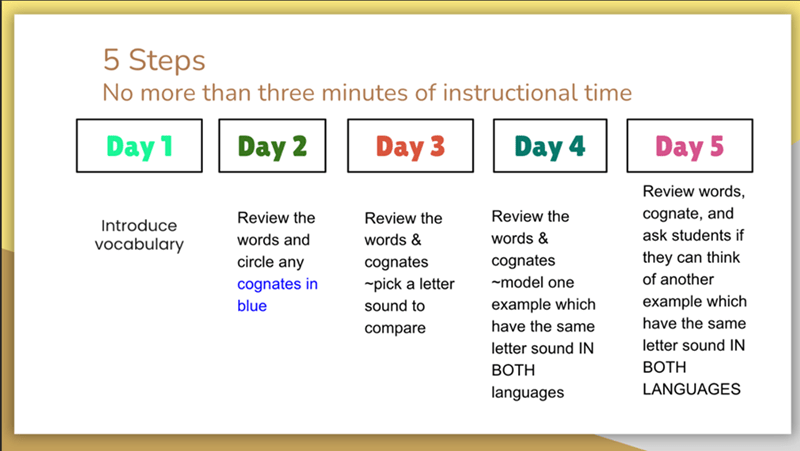
During this first year, teachers were trained to follow a five-day bridging cycle aligned with Creative Curriculum investigations. For example, during the Music investigation:
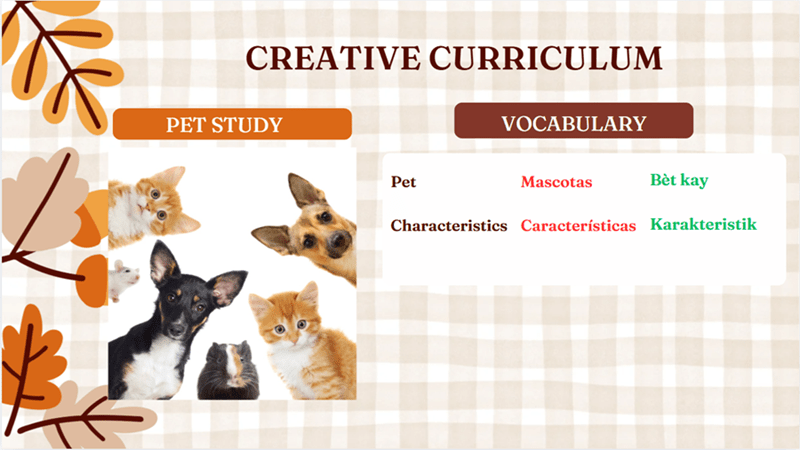
● Day 1: Teachers introduced one to three academic vocabulary words in English and in students’ home languages, such as Music, musica, and mizik.
● Day 2: Vocabulary was reviewed, and children were encouraged to listen for similarities across languages. Teachers supported students in identifying cognates or words that began with the same sound, circling them when similarities existed and explicitly acknowledging when they did not.
● Day 3: Teachers revisited the vocabulary, noting similarities and differences, and selected one initial letter to study for the remainder of the week. The letter and its sound were introduced in English and in students’ home languages, such as “m.”
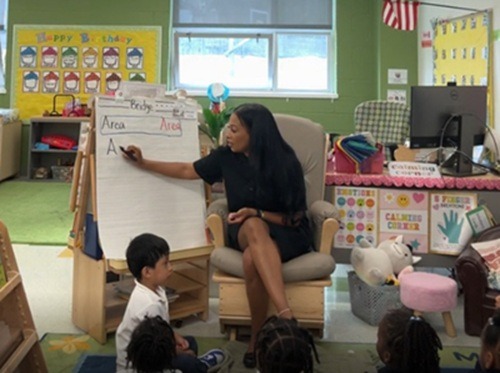
● Day 4: Children recalled the letter and its sound and generated words beginning with the same sound in each language, such as mother, madre, and manman.
● Day 5: Teachers reviewed the week’s learning and extended the work by adding more words for the target letter across all represented languages, such as milk, mantequilla, and mayi.
Languages used during bridging were determined by the linguistic makeup of each classroom. If students spoke English and Spanish, those were the languages bridged. If English, Spanish, and Haitian Creole were present, all three languages were included.
During the first year, teachers were required to use the provided resources and implement the Bridge Technique during Shared Writing. This intentional structure ensured consistency, supported implementation fidelity, and allowed teachers to build confidence in the strategy’s Steps.
Year Two (2024–2025): Expanding and Strengthening Practice
In the second year, the Bridge Technique expanded to classrooms led by English-speaking teachers supported by bilingual paraprofessionals. In these settings, approximately half of the students were dual language learners. While the strategy remained the same, implementation became more complex. Teachers were bridging languages they did not speak; consistency
varied, and buy-in took time.
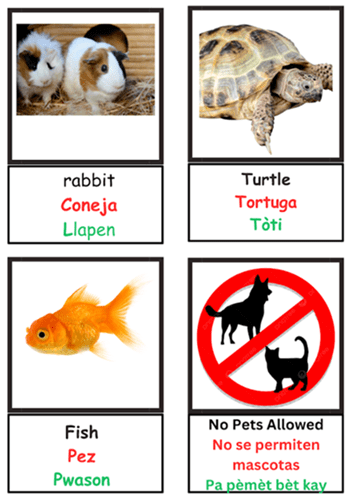 Ongoing professional learning was critical. Teachers received continued training, classroom check-ins, and opportunities to reflect during meetings. Teachers also provided feedback through surveys, which helped inform coaching conversations and adjustments to support. Photos and videos of classroom implementation were collected, shared during meetings, and uploaded to a shared Google Drive. These artifacts became valuable tools, allowing teachers to observe the strategy in action across different classrooms and language combinations.
Bridge Use Survey 2023-2024
| Have you used the Bridge strategies during Large-Group? | If you started to use Bridge, on a scale of 1 to 5, how do you like it? (1 lowest 5 highest) | If you started to use Bridge, tell me how are the children demonstrating their understanding? |
|---|---|---|
| Yes | 5 | Scholars really enjoy bridging most days, some days they are more eager for choice time but still enjoy learning new vocabulary in different languages |
| Yes | 3 | By speaking English and Spanish and using labels, pictures as guides. |
| Yes | 5 | They repeated the words |
| Yes | 5 | They understand that the same words can say in three different language |
| Sometimes | 2 | Confusing for them sometimes |
| Yes | 5 | My students love to learn new words in all three different languages. They are becoming aware that some words have the same spelling and pronunciation in all three languages. They also feel proud and take pride in remembering how to pronounce the words by time Day 2 or Day 3 comes around. I think Bridge is also helping my students with identifying letters and letter sounds especially for my lower level students. I observed that they are quickly picking up on the concept and are eager to participate. |
| Sometimes | 3 | The children had some challenges in the beginning, but being consistent with using the Bridge was a challenge. There were days I worked without a para and dealt with challenging behaviors from students that have open CST referrals/cases. |
| Sometimes | 3 | Some letter recognition from same students |
| Yes | 3 | I feel that some of the words would be better explained using visuals. (Some words are too abstract to use visuals.) Children and teacher both try to use the words throughout the day in order to further emphasize the words. |
| Sometimes | 2 | I've noticed students participating more in large group when they were able to make that connection between their home-language and English. |
| Yes | 5 | Students understand and feel more familiar with the topics being discussed in class.And they demonstrated when they use the new words. |
| Sometimes | 2 | They demonstrate their understanding by using the language at other times throughout the day without prompting to do so. |
| Yes | 5 | The scholars do enjoy learning the new vocabulary words through Bridge. They all participate in repeating them in different languages. However, I am seeing a low level of retention and comprehension when it comes to the meaning of some of the words. |
| I tried once, but I could not continue. | I am just starting to implement it. | |
| Yes | 4 | The Bridges help the students improve their vocabulary in multiple ways. |
| Yes | 3 | They look confused. |
| Yes | 3 | The children are used to the resources that are given to them already from the Lesson Plan book, which I teach to the scholars currently. So they are familiar with, and are comfortable with learning words in multiple languages. I think that some words are difficult for the children, like ligaments, which was one of the bridge words today. |
| Yes | 4 | The students are using the words in conversations with friends. |
| Yes | 3 | They haven't yet |
| Yes | 5 | I have a student that she like to say "my Heart" se mueve rápido |
Flexibility was intentionally built into the Bridge Technique. While teachers were encouraged to introduce one to three vocabulary words, they had the flexibility to select anywhere from one to five vocabulary words when appropriate, based on children’s interests and comprehension.
Teachers also had access to shared resources, including a Google spreadsheet with pre-selected vocabulary aligned to Creative Curriculum studies, step-by-step guidance, and visuals for each vocabulary word across languages.
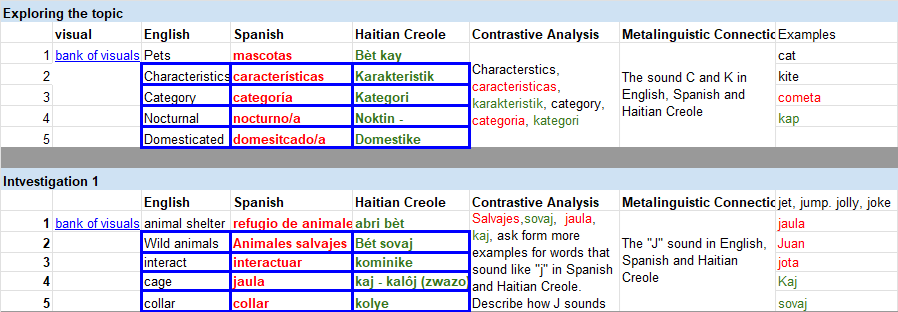
See the spreadsheet with all of the topics.
Perhaps the most powerful factor was teacher leadership. Educators from the first cohort shared their experiences, challenges, and successes, motivating and supporting teachers in the second year. As teachers began to see children’s faces light up and families engage more deeply, confidence and commitment grew.
Year Three (2025–2026): Moving Toward Organic Implementation
During this school year, the Bridge Technique is being implemented by English-speaking teachers and paraprofessionals in classrooms with four or fewer dual-language learners. While the classroom context looks different, the commitment to honoring students’ home languages remains strong.
For the first-year cohort, expectations shifted from structured implementation to intentional flexibility. Teachers were no longer required to bridge language during a specific instructional block. Instead, they were encouraged to apply the strategy where it felt most natural—during read-alouds, small-group instruction, learning activities, or other meaningful moments throughout the day. This shift reflected teachers’ growing expertise and comfort with the
strategy’s purpose.
2025 Spring Conference Silver Sponsor
As an instructional coach, the goal was to make language use organic—not a checklist or requirement, but a natural part of instructional decision-making. Once teachers understood why bridging mattered and were confident in its implementation, the practice became embedded in daily instruction among bilingual teachers. For teachers who did not speak the language, Pocketalk devices were provided to support their progress.
Reflections and Looking Ahead
Across all three years, one consistent trend emerged: with high-quality training, continuous coaching, and opportunities for collaboration, teachers remained motivated to sustain the work, even when challenges arose. The Bridge Technique strengthened classroom communities, validated students’ identities, and increased family engagement, particularly among bilingual families who felt seen and valued.
All three cohort groups provided positive feedback. Teachers reported increased student participation, including English-speaking students showing excitement about learning a second language. Many teachers reported that children became more confident using new vocabulary across languages and were more willing to take risks when speaking. Family engagement also
increased. Parents became more involved in classroom learning and often supported teachers by helping with pronunciation or sharing language knowledge. Some families expressed excitement about their children learning multiple languages.
Teachers acknowledged that the initial implementation was challenging. However, as they began to see student engagement, family excitement, and academic growth, they accepted the challenge and became motivated to continue improving their practice. Many now look forward to continuing their growth in language bridging.
Now in our third year of implementation, one important reality is clear: the Bridge Technique is most naturally implemented when teachers are bilingual. However, it is not impossible for English-speaking teachers to implement successfully. It requires a strong team effort, intentional collaboration, family partnership, and authentic buy-in to ensure consistency and sustainability.
As the instructional coach facilitating this work, I have found the experience both challenging and rewarding. While the first year felt natural due to frequent classroom visits, the second year required deeper collaboration with other instructional coaches and paraprofessionals to ensure consistent support. These partnerships proved essential and reinforced that sustained instructional change is always a collective effort.
This three-year journey reaffirmed a core belief: students’ home languages are powerful assets. When educators intentionally bridge languages, they support not only academic growth but also identity development, confidence, and belonging. As this work continues, it offers a replicable model for schools and districts seeking to move from structured implementation toward sustainable, language-affirming practice.
Veronica Murillo, NJTESOL/NJBE’s Bilingual/ESL Early Childhood / Pre-K – K Representative SIG Representative, has been teaching Pre-Kindergarten since 2007 and has served as an instructional coach since 2014, specializing in supporting multilingual learners. Throughout her career, she has been dedicated to creating inclusive early childhood classrooms that nurture language development and meaningful learning experiences for young children. She works closely with educators to strengthen instructional practices that support language acquisition in developmentally appropriate ways. Veronica is passionate about empowering teachers and celebrating the linguistic and cultural strengths that multilingual learners bring to the classroom.