• Home
    • Voices Weekly and Annual Journal
  • Membership
  • Spring Conference
    • Keynote Speakers
  • Scholarships
    • Scholarship Donations
  • Chapters
  • Links & Resources
    • 2026 Voices Journal
    • 2026 Spring Weekly Voices
    • Parent Resources
    • Advocacy
    • Seal of Biliteracy
    • Online Teaching Resources
  • Executive Board
  • About
    • Other Conferences
    • Hotlist Information

Contact Us by Email

webmaster@njtesol-njbe.org
NJTESOL/NJBENJTESOL/NJBE
  • Home
    • Voices Weekly and Annual Journal
  • Membership
  • Spring Conference
    • Keynote Speakers
  • Scholarships
    • Scholarship Donations
  • Chapters
  • Links & Resources
    • 2026 Voices Journal
    • 2026 Spring Weekly Voices
    • Parent Resources
    • Advocacy
    • Seal of Biliteracy
    • Online Teaching Resources
  • Executive Board
  • About
    • Other Conferences
    • Hotlist Information

Annual Voices Journal

Volume 6 - 2026

Lo que los educadores bilingües de Nueva Jersey necesitan ahora: Marco DALE de WIDA, los estándares de desarrollo del idioma españolitle

Margaret Churchill
Departamento de Lengua, Literatura, Cultura y Escritura
Universidad William Paterson

¿Es usted un educador bilingüe de habla hispana en Nueva Jersey? ¿Alguna vez se ha preguntado cómo impartir instrucción basada en los estándares NJSLS en español? ¿Su distrito necesita un currículo en español que fomente el desarrollo de contenido y del idioma? La respuesta está aquí: Marco de los estándares del desarrollo auténtico del lenguaje español de WIDA (Marco DALE)

Durante los últimos ocho años, he trabajado en estrecha colaboración con candidatos a maestros bilingües y de ESL que están aprendiendo los estándares, metodologías y prácticas actuales en educación multilingüe. Si bien todavía existe una escasez de educadores, me complace informar que, a lo largo de estos años, ha habido un aumento constante en el número de candidatos a maestros bilingües y de ESL, un resultado directo del aumento sustancial en el número de estudiantes multilingües (ML) matriculados en las escuelas de Nueva Jersey. Al menos la mitad de estos candidatos buscan la certificación bilingüe del estado.

En nuestros cursos, reviso los estándares de desarrollo del idioma inglés de WIDA aprobados por el estado (Marco WIDA ELD 2020), así como los estándares de desarrollo del idioma español (Marco DALE y Marco ALE 2023). Esto último siempre resulta una sorpresa: estos estándares les son completamente desconocidos, a pesar de que la mayoría de estos maestros han sido contratados provisionalmente y actualmente enseñan en entornos bilingües en distritos con exenciones por escasez de maestros. Esta escasez es una realidad, no solo en Nueva Jersey, sino en todo el país.

¿Por qué los estándares de desarrollo del idioma español son una sorpresa? Después de todo, Nueva Jersey es un estado que utiliza WIDA. Hemos aprobado los estándares y evaluaciones de WIDA para prekínder a 12. El Marco DALE es el equivalente al Marco WIDA 2020. De hecho, la revista Language Magazine presentó una comparación lado a lado en febrero de 2024, titulada “Enmarcando el desarrollo auténtico en español“. Además, hay seminarios web de implementación gratuitos en el Portal de WIDA, en la sección de desarrollo profesional, disponibles para todos los maestros bilingües/de ESL registrados en Nueva Jersey.

Recientemente compartí mis inquietudes sobre esta falta de conocimiento con los investigadores de WIDA Español y decidí explorar las posibles barreras para la implementación. Quería saber por qué los maestros bilingües no conocían, y mucho menos utilizaban, el Marco DALE en sus entornos educativos bilingües. Un examen del Código Bilingüe de Nueva Jersey, N.J.A.C. 6A:15, reveló lo siguiente: “La junta directiva del distrito escolar establecerá programas de educación bilingüe o de inmersión en dos idiomas siempre que haya 20 o más estudiantes de inglés como segunda lengua (ML) en cualquier clasificación lingüística matriculados en el distrito escolar desde jardín de infancia hasta el 12.º grado, de conformidad con N.J.S.A. 18A:35-18.”
Lectorum ad

2025 Spring Conference Gold Sponsor

Por lo tanto, las autoridades educativas locales (LEA) establecen programas bilingües.

El código continúa definiendo el propósito del programa bilingüe: “Los programas de educación bilingüe o de inmersión en dos idiomas deberán: 1. Estar diseñados para preparar a los estudiantes de inglés como segunda lengua (ML) para que adquieran los conocimientos y habilidades de inglés suficientes para cumplir con los Estándares de Aprendizaje de Nueva Jersey (NJSLS).

Por lo tanto, los programas bilingües se basan en los NJSLS, que están únicamente en inglés. Esto concuerda con la realidad, ya que a menudo los estudiantes de posgrado me comentan que el consejo que reciben es que enseñen los estándares regulares de Nueva Jersey, pero en español.

Además, según el código, “Todos los estudiantes de inglés como segunda lengua (ML) que participen en programas bilingües y de inmersión en dos idiomas también deberán… 2. Incluir un currículo que esté alineado con los NJSLS y los estándares ELD e incluya instrucción en el idioma materno para fomentar el dominio de la lectoescritura en el idioma materno y como apoyo en el desarrollo de la competencia en inglés;

Por lo tanto, las autoridades educativas locales (LEA) están obligadas a tener un currículo bilingüe que se alinee con los estándares NJSLS y WIDA ELD, que esté en español e incluya alfabetización y desarrollo del idioma español.

Finalmente, el código del Departamento de Educación de Nueva Jersey (NJDOE) añade que los programas bilingües “4”. Utilizarán un currículo para programas de educación bilingüe adoptado por la junta directiva del distrito escolar… La junta directiva del distrito escolar desarrollará y adoptará un currículo de ESL que aborde los estándares de desarrollo del idioma inglés (ELD) para satisfacer las necesidades de instrucción de los estudiantes multilingües… y 2. estará interrelacionado con los currículos de educación bilingüe y de las áreas de contenido académico del distrito escolar para garantizar que la instrucción de ESL esté correlacionada con todas las áreas de contenido académico impartidas.

Por lo tanto, debe haber una alineación completa entre los Estándares de Aprendizaje de Nueva Jersey (NJSLS), los currículos bilingües aprobados por el distrito y el currículo de ESL (que debe basarse en el Marco WIDA ELD 2020).

Las bases ya están sentadas por el propio código bilingüe de nuestro estado: Utilice Marco DALE; cumple con los criterios anteriores para satisfacer los requisitos del NJDOE.

Por curiosidad, busqué en los sitios web de los cuatro distritos escolares urbanos más grandes de Nueva Jersey con el mayor número de estudiantes multilingües para encontrar estos currículos bilingües aprobados por el distrito y descubrí que ninguno estaba publicado.

En un solo sitio web encontré planes de estudio, publicados en inglés, que correspondían al Marco Curricular de Artes del Lenguaje en Inglés (ELA), según lo indicado por el Departamento de Educación de Nueva Jersey (NJDOE). No encontré ningún plan de estudios bilingüe. Había descripciones narrativas de programas bilingües, como por ejemplo:

“Los niños seguirán el mismo plan de estudios que sus compañeros monolingües; sin embargo, como programa de transición, se presta especial atención al dominio del español y del inglés por parte de los estudiantes”.

También: “Los estudiantes multilingües reciben instrucción en su lengua materna para un desarrollo efectivo del contenido en todas las áreas. El segundo idioma y el inglés tienen igual valor y estatus en la enseñanza y el aprendizaje. Los estudiantes son impartidos por maestros bilingües y de ESL certificados”.

Otra descripción indicaba: “Los maestros bilingües imparten el mismo plan de estudios de contenido básico que los maestros del programa general; la diferencia fundamental radica en la forma en que los maestros imparten ese plan de estudios, utilizando ambos idiomas y realizando adaptaciones significativas en la planificación, el ritmo y la presentación de las lecciones”.

the four principles of Accelerated Learning

Quizás existan planes de estudio bilingües disponibles, pero no publicados. Sin embargo, cuando les pregunto a mis estudiantes, no pueden proporcionármelos. Su tiempo lo dedican a crear materiales en español para impartir los planes de estudio del distrito de acuerdo con los Estándares Estatales de Nueva Jersey (NJSLS). Incluso estas descripciones de programas bilingües centran su enfoque instruccional en los “compañeros monolingües”, con énfasis en la transición al inglés y en la “adaptación” a la lengua materna. Esto parece contradictorio con el sitio web del NJDOE sobre Aceleración del Aprendizaje, que incluye un enfoque específico en los estudiantes multilingües: Apoyo a la Aceleración del Aprendizaje para Estudiantes Multilingües (PDF).
El NJDOE utiliza el siguiente gráfico para ilustrar la interconexión de los cuatro principios del Aprendizaje Acelerado:

El sitio web de Aprendizaje Acelerado del NJDOE señala que “El Principio 2, mejorar el acceso equitativo al contenido del nivel de grado y a los recursos de alta calidad, se encuentra en la cúspide del triángulo. Esta posición enfatiza el papel fundamental que desempeña en la preparación de todos los estudiantes de Nueva Jersey para el éxito postsecundario”. La misma página nos recuerda que “El rendimiento académico de los estudiantes multilingües está directamente relacionado con su dominio del lenguaje académico”.

Por lo tanto, es esencial que los distritos adopten El Marco DALE – Estándares de Desarrollo del Lenguaje Español para garantizar la equidad en la enseñanza y el aprendizaje de nuestros estudiantes bilingües. ¡Es gratuito! Incluso existe una interfaz digital de estándares: WIDA Digital Explorer – Marco DALE. Además, WIDA ha creado una carta que los maestros y líderes de distrito pueden usar para plantear este tema a su administración local: Marco DALE Estimado Administrador. Dado que la autoridad final para establecer este plan de estudios integrado recae en los distritos escolares locales, deben tratar de cerrar la brecha de rendimiento entre los ML y sus homólogos monolingües que creen prácticas de enseñanza y aprendizaje equitativas.

WIDA (2023). Marco de los estándares del desarrollo auténtico del lenguaje español de WIDA: Kínder al 12º grado. Junta de Regentes del Sistema de la Universidad de Wisconsin. https://wida.wisc.edu/teach/spanish/marco-dale

What New Jersey Bilingual Educators need now:  WIDA’s Marco DALE, the Spanish language development standards

Margaret Churchill
Department of Language, Literature, Culture, and Writing
William Paterson University

Are you a Spanish-speaking bilingual educator in New Jersey?  Have you ever wondered how to deliver a NJSLS standards-based instruction in Spanish?  Is your district in need of a Spanish-based curriculum that delivers content and language development?  The answer is here:  Marco de los estándares del desarrollo auténtico del lenguaje español de WIDA (Marco DALE)

For the last eight years, I have worked closely with bilingual and ESL teacher candidates who are learning the current standards, methodologies, and practices in multilingual education.  Although there is still an educator shortage, I am happy to report that over these years, there has been a steady rise in the number of bilingual and ESL teacher candidates- a direct result of the substantial increase in the number of multilingual learners (MLs) enrolled in New Jersey schools.  At least half of these candidates are seeking the state’s bilingual endorsement.

Benchmark ad

2025 Spring Conference Silver Sponsor

In our coursework, I review the state-approved WIDA English language development standards (2020 WIDA ELD Framework) as well as the Spanish language development standards (2023 Marco DALE and Marco ALE).  The latter always comes as a surprise- these standards are completely unknown to them, even though most of these teachers have been provisionally hired and are currently teaching in bilingual settings in districts with waivers for teacher shortages.  This shortage is the reality, not just in New Jersey, but across the country.

Why are the Spanish language development standards a surprise?  New Jersey is a WIDA state, after all.  We have approved WIDA Standards and assessments for prek-12.  El Marco DALE is the mirror to the 2020 WIDA Framework.  In fact, Language Magazine presented a side-by-side comparison in February 2024, Framing Authentic Development in Spanish.  In addition, there are free implementation webinars in the WIDA Portal under professional learning- available to all registered bilingual/ESL teachers in New Jersey.  I recently shared my concerns about this lack of awareness with WIDA Espanol researchers and decided to explore possible barriers to implementation.  I wanted to know why bilingual teachers didn’t know, let alone use, Marco DALE in their bilingual educational settings.

An examination of the New Jersey Bilingual Code, N.J.A.C. 6A:15, revealed the following: “The district board of education shall establish bilingual education or dual language immersion programs whenever there are 20 or more MLs in any one language classification enrolled in the school district in kindergarten through 12th grades, pursuant to N.J.S.A. 18A:35-18.”

So, local education authorities (LEAs) establish bilingual programs.

The code goes on to define the purpose of the bilingual program:
“Bilingual education or dual language immersion programs shall: 1. Be designed to prepare MLs to acquire sufficient English knowledge and skills to meet the NJSLS.

So, bilingual programs are based on the NJSLS – which is only in English.

This rings true, as I am often told by graduate students that the advice they are given is to teach the regular New Jersey standards, but in Spanish.

Furthermore, according to the code, “All MLs participating in bilingual and dual language immersion programs shall also…2. Include a curriculum that is aligned to the NJSLS and the ELD standards and includes primary language instruction delivered to further master literacy in the primary language and as a support in the development of English proficiency:

So, LEAs are required to have a bilingual curriculum that aligns with NJSLS and WIDA ELD standards that is in Spanish, and includes Spanish literacy and Spanish language development.

Booksource ad

2025 Spring Conference Silver Sponsor

Finally, the NJDOE code adds that bilingual programs “4. Utilize a curriculum for bilingual education programs that is adopted by the district board of education…The district board of education shall develop and adopt an ESL curriculum that addresses the ELD standards to address the instructional needs of MLs…and 2. shall be cross referenced to the school district’s bilingual education and academic content area curricula to ensure that ESL instruction is correlated to all academic content areas taught.

So, there should be full alignment between NJSLS, the approved district bilingual curricula, and the ESL curriculum (which must be based on the 2020 WIDA ELD Framework).

The groundwork has been laid by our state’s very own bilingual code:  Use Marco DALE- it meets the above criteria to satisfy NJDOE requirements.

Out of curiosity, I searched the websites of the four largest urban school districts in New Jersey with the highest number of multilingual learner populations in order to locate each district’s approved bilingual curricula and found that none were posted.

At only one website was there curricula, posted in English, which was the ELA Curricular Framework, as referenced by NJDOE.  I did not find any bilingual curricula.  There were narrative bilingual program descriptions, like

“Children will follow the same curriculum as their monolingual counterparts; however, as a transitional program, special attention is given to the students’ proficiency in both Spanish and English.”

Also, “Multilingual Learners receive primary (native) language instruction for effective content development in all content areas. The second language and English have equal value and status in teaching and learning. Certified Bilingual and ESL teachers teach students.”

Another stated, “Bilingual teachers provide the identical core content curriculum as that taught by general program teachers; the critical difference exists in the delivery of that curriculum by the teachers through use of the two languages and through significant accommodations in lesson planning, pacing, and presentation.”

Perhaps there are bilingual curricula available, but not posted.  However, when I ask my students, they cannot produce it.  Their time is spent making Spanish-language materials to deliver the existing NJSLS district curricula. Even these bilingual program descriptions place their instructional focus on “monolingual counterparts” with an emphasis on transitioning to English and “accommodating” the native language.  This seems contradictory to the NJDOE’s website on Learning Acceleration, which includes a specific focus on multilingual learners here:  Supporting Learning Acceleration for Multilingual Learners (PDF).

NJDOE uses the following graphic to illustrate the interconnectedness of the four principles of Accelerated Learning:

the four principles of Accelerated Learning

The NJDOE Accelerated Learning website points out that, “Principle 2, improving equitable access to grade level content and high-quality resources, is at the apex of the triangle. This positioning is to emphasize the critical role it plays in preparing all New Jersey students for post-secondary success.”  The same page goes on to remind us that “The way MLs perform academically in school is directly related to their academic language proficiency.”

So, it is essential that districts move to adopt El Marco DALE- The Spanish Language Development Standards to ensure equity in teaching and learning for our bilingual students.  It is free!  There is even a digital standards interface:  WIDA Digital Explorer- Marco DALE  Conveniently, WIDA has created a letter that teachers and district leaders can use to raise this issue with their local administration:  Marco DALE Dear Administrator.  Since the final authority for establishing this integrated curriculum rests with local school districts, they must seek to bridge the achievement gap between MLs and monolingual counterparts that creates equitable teaching and learning practices.

WIDA (2023). Marco de los estándares del desarrollo auténtico del lenguaje español de WIDA: Kínder al 12º grado. Junta de Regentes del Sistema de la Universidad de Wisconsin. https://wida.wisc.edu/teach/spanish/marco-dale

Maggie Churchill is the current Past President of NJTESOL/NJBE.  She is a middle school ESL teacher and adjunct instructor at William Paterson University where she works with bilingual and ESL teacher candidates.  Maggie has worked closely with WIDA researchers to better understand and deliver the WIDA ELD and SLD Standards Frameworks.

WIDA ad

2025 Spring Conference Platinum Sponsor

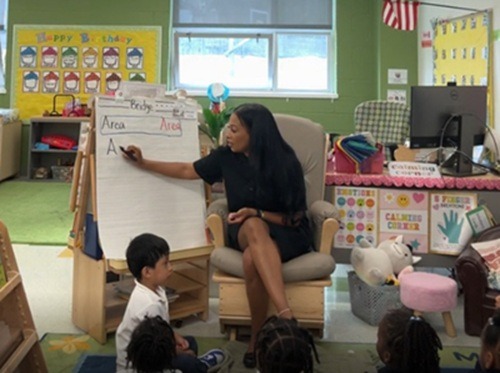
A teacher with young students learning the alphabetBridging Languages, Building Confidence: A Three-Year Journey with the Bridge Technique– Veronica Murillo

Articles:

What New Jersey Bilingual Educators need now: WIDA’s Marco DALE, the Spanish language development standards– Maggie Churchill

Bridging Languages, Building Confidence: A Three-Year Journey with the Bridge Technique– Veronica Murillo

Utilizing Home Languages to Support Reading Comprehension– Caitlin Doremus

Equity is a How, Not a What: Partnering with a Shared Vision for Multilingual Student Success– Cecilia Vila Chave

From Chalkboard Lines to AI Maps: Reimagining Sentence Diagramming for Today’s English Learners– Siu Hei (Andy) Szeto

Say More! With Nina and Ms. Lee– Jenna Maneri

College Readiness – Bridging Pathways to Higher Education– Leah Carmona

Contact Us

Send an e-mail to: webmaster@njtesol-njbe.org

Send Message

Home
About Us
Executive Board Nominations
Spring Conference
Other Conferences
Seal of Biliteracy
Advocacy
Chapter News
Membership Application
Discussion List Information
Awards & Scholarships
Scholarship Donation
Helpful Links
Online Teaching Resources
Voices Newsletter
Executive Board
Privacy Policy
NJTESOL-NJBE By-Laws Approved 2-7-2020
Contact Us

For Your Information

Transitional Changes to State Assessments and Graduation Requirements

Position Statement on Language Rights

Testimony to NJDOE about changes to the Bilingual Code

Position Statement on Protecting the Rights of English Language Learners

NJDOE PARCC Testing Accommodations for English Learners

Resource: FABRIC – A Learning Paradigm for ELLs

Important Dates

Spring Conference 2026

May 19, 20, & 21, 2026
(Tuesday, Wednesday, & Thursday)