All Learners are Language Learners: Planting the Seed of Language
Development in ALL Spaces
Cecilia Vila Chave
NJTESOL/NJBE President
NJ Supervisor of ESL Programs
One of the challenges (or opportunities!) of coaching educators to implement SLA strategies in their content area classrooms is their belief that we are adding to an already full plate. The most common argument as to why those strategies are not consistently in place are: “I have X number of students; I can’t be doing something different for everyone.” My strategy for combatting this challenge and shifting mindsets has been repeating the mantra: All Learners are Language Learners. However, in an era where educators are required to use data to support the choices they make in their classrooms, I too have to provide evidence that this mantra is also a fact.
As an administrator, I have come to realize that long-lasting change takes time and in order for the changes to stick, you have to leverage members of your team as models rather than speaking from your own experience. To that end, I partnered up with one of our high school social studies teachers this year to model how SLA strategies enhance student learning and achievement, regardless of the student:
- Who? A veteran Social Studies teacher at a NJ high school, teaching a dual enrollment course on Holocaust and Modern Day Genocide. All students in this classroom were monolingual or former MLs.
- Why? At the beginning of the school year, the teacher reflected on the lack of engagement in classroom discussions with her students: “In years past, students were leading conversations, generating opinions, and contributing to the learning. But this year, it is … crickets.”
- What? We discussed that in order for students to meaningfully engage in conversation they need explicit language instruction: Speaking, Listening, Reading, and Writing. And that the Language for Social Studies needed to also be explicitly taught.
- How? We worked together in developing a plan to embed two tried and true strategies for multilingual learners, with her dual enrollment students:

Reflection Journals
📒Reflection Journals: students were given a journal (they got to decorate it and make it their own!) and the protocol for student reflection, organized thinking, and activating prior knowledge was set.
💬Community Circles: students were engaged in the practice of “classroom circles” sometimes leveraged as “restorative circles”, where everyone had the opportunity to share meaningfully and safely. The success of this strategy relied upon two key norms of engagement the teacher set forth: be present and listen to understand not to respond.
🧱Personal Word Walls: students were given the opportunity to explore the academic / target language for the unit before starting to learn the content. They worked over multiple days to write the vocabulary/ concepts, define them, apply them in context and practice the pronunciation of any non-English words.

Moderate Hutu
The outcome? Students were able to organize their thinking without fear of “being wrong”, they were able to engage in meaningful conversations about difficult topics, and they acquired learning skills that enhanced their understanding and were transferable to any topic or subject.
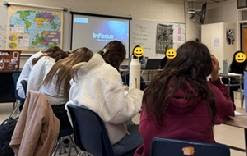
Community Circles
The biggest lesson I have learned from my four years as a Supervisor is to focus energy on identifying positive disruptors in a team and work hard at creating the spaces they need to try new things, without fear of failure, and let them be the ones to lead the change. This is an example of a transformational educator, who no matter how many years they have been in the field, they are committed to learning and growing as a teacher too. My many thanks to them for providing the data to support the mantra: All Learners are Language Learners.