
• Home
    • Voices Weekly and Annual Journal
  • Membership
  • Spring Conference
    • Keynote Speakers
  • Scholarships
    • Scholarship Donations
  • Chapters
  • Links & Resources
    • 2026 Voices Journal
    • 2026 Spring Weekly Voices
    • Parent Resources
    • Advocacy
    • Seal of Biliteracy
    • Online Teaching Resources
  • Executive Board
  • About
    • Other Conferences
    • Hotlist Information

Contact Us by Email

webmaster@njtesol-njbe.org
NJTESOL/NJBENJTESOL/NJBE
  • Home
    • Voices Weekly and Annual Journal
  • Membership
  • Spring Conference
    • Keynote Speakers
  • Scholarships
    • Scholarship Donations
  • Chapters
  • Links & Resources
    • 2026 Voices Journal
    • 2026 Spring Weekly Voices
    • Parent Resources
    • Advocacy
    • Seal of Biliteracy
    • Online Teaching Resources
  • Executive Board
  • About
    • Other Conferences
    • Hotlist Information

10 Activities to Improve Your English Vocabulary

By Emile Dodds

This guide for students notes that although English has about a million words, most speakers know 20,000 of them, which is still a lot of words.

Dodds starts with six basic suggestions for learning vocabulary.

1. Try to learn vocabulary in context. This is more effective than practicing lists.

2. Remember that English words tend to have multiple meanings.

3. Vocabulary … means phrases, idioms and expressions.

4. Always try to guess the meaning of new vocabulary before you look it up.

5. Have a notebook to keep track of new vocabulary. Write the sentence that contains the word and underline the word.

6. Review your vocabulary notebook regularly.


The author then lists ten possible vocabulary building activities starting with the easiest ones.

Easy Activities:

1. Quiz time – Online quizzes such as this one from the Longman Dictionary
2. Word games – [advanced vocabulary] such these from Merriam Webster
3. Who said that? Use famous quotations to find new vocabulary

Medium-Effort Activities

4. Vocabulary hunt and write – find 5-10 new words in a short article. Copy the sentences and write a few other sentences.
5. The new word checklist that includes Seen it, Heard it, and Used it.
6. Make your own vocabulary quiz
7. Matching preposition Include the prepositions that are used with new words. Check a collocations website
8 Simple word challenge – Look for words like get and do that are used in combination with other words resulting in collocations that have different meanings.

Hard or Challenging Activities

9. The sales pitch – Listen to an advertisement and then create your own.
10. Vocabulary deep dive – Look up other definitions and the word origin of a word on your list.

Here you can find more links and the skills lists.

See more study ideas, challenges, and podcasts here.

Announcements

Imagine Learning ad

2025 Spring Conference Silver Sponsor

Morris/Sussex Counties Virtual Chapter Meeting, Thursday, Apr 16 from 5:30 pm to 6:30 pm. Title: Breaking Language Barriers: How Assistive Technology Empowers Bilingual Learners Presenter: Cecilia Esteves, Register on Eventbrite.

Join us for the Virtual SIG Meet & Greet hosted by NJTESOL/NJBE on April 17th at 6:30! This will be a great opportunity to meet the elected leaders representing your professional interests and learn how to get more involved in the organization!
At this event, you’ll meet the Special Interest Group (SIG) Representatives who serve on the Executive Board and advocate for educators and Multilingual Learners across different contexts.
Bonus: Stay afterward for the Monthly Executive Board Meeting at 7:00 PM to see how NJTESOL/NJBE leadership collaborates, advocates, and plans for upcoming events!
Register for both on Eventbrite.

The Passaic County Chapter cordially invites you to their April PD session, Wednesday April 22, 2026, 6:30-7:30pm. via Zoom
Presenter: Andrea Bitner is an English Language Learner (ELL) educator, author, and speaker. Now in her 26th year in public education, she has taught K–12 multilingual learners from around the world, empowering them to thrive through language and connection.
Her new book, When Niagara Falls, released October 2025, is a powerful memoir about a student named Niagara who learns to trust and heal through the connection with a dedicated teacher who sees beyond her protective walls.
Register via Eventbrite. PD certificate provided.

Join NJTESOL/NJBE virtually for our final PLC meeting of the school year on April 23rd at 5:00 pm. Verbal Reasoning and Literacy Knowledge Strands of Language Comprehension is presented by Maria Halkias, Assistant Professor at Stockton University, and Christiana Dalton, ESL Teacher. We are pleased to continue NJTESOL/NJBE’s overview of the Science of Reading/Structured Literacy. Register on Eventbrite

Register for the 2026 Spring Conference
Theme – Unlock Your Potential: BE Multilingual – Celebrating 50 Years of NJBE
You can attend in person at the Hyatt Regency Hotel, May 19, 20, & 21 (Tuesday, Wednesday & Thursday) OR view the Virtual Library Conference: May 27 through August 20 Regular registration is open through April 24, 2026 or until capacity is reached.
See more information here.

Uncovering Language Learning Strategies for University Students in STEM

Tokyo University of Science

Due to globalization, being able to communicate and publish research in English is essential for students around the world who are entering STEM fields. To help them learn the language as quickly as possible, it is important for educators to identify successful strategies. The Strategy Inventory for Language Learning (SILL) is a tool that has been used internationally for a long time to analyze these strategies.


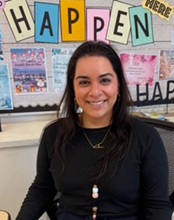
However, when applying this tool, Associate Professor Akihiro Saito from the Institute of Arts and Sciences at Tokyo University of Science, Japan found that the SILL was not adequate in measuring his students’ strategies because it was not statistically valid and was not relevant to the culture. In order to achieve more useful results, he adapted the SILL for Japanese students. He brought together English teachers and other experts and gave the test to 599 university students.

The new tool focused on “six categories of learning strategies: memory strategies for storing information; cognitive strategies for comprehension and production; compensation strategies for overcoming knowledge gaps; metacognitive strategies for planning and monitoring; affective strategies for managing emotions and motivation; and social strategies for interaction.”

When analyzing the results of this study, Saito found that the most frequently used strategies were compensatory, such as guessing unknown words. Motivation and managing emotions were used the least. A possible reason for this is that the compensatory strategies are easier to use. Having this information can help teachers plan lessons that could help students adopt additional methods of language learning. The researchers also suggested that this alternate version of the SILL can be adapted for other English learners.

Here is more information and a link to the study.

March 31, 2026

Meet the 2026 Spring Conference Invited Speakers

(left to right):

Grazzia Maria Mendoza Chirinos, Gillian Ober, Andrea Sodhi, JoAnne Negrin, Ed.D, and Ms. Julie Ochoa

Articles

Instruction as Advocacy– Amber Ingram

Building a Professional Learning Network (PLN) on Social Media: What Worked for Me!– Cecilia Vila Chave

Meet the 2026 Spring Conference Invited Speakers

10 Activities to Improve Your English Vocabulary -Emile Dodds
and
Uncovering Language Learning Strategies for University Students in STEM -Tokyo University of Science

Wordless but not silent: Unlocking the power of wordless picture books -Jennifer D. Honaker, Ryan T. Miller
and
Virtual art meets language learning: A tech-enhanced ESL experience
-Nesreen El-Baz, ESL Educator

The Courage to Learn -Douglas Fisher, Nancy Frey, and James Marshall
and
When Have You Ever Failed at Something? What Happened as a Result? -Katherine Schulten

Adapting Gradual Release of Responsibility for English Language Learners -Tan Huynh and Beth Skelton
and
Using PBL to Support Young English Learners -Cecilia Cabrera Martirena

Language of Identity, Language of Access -Michelle Benegas and Natalia Benjamin
and
Classroom Activities for Building Critical Multilingual Awareness -Naashia Mohamed

Using a True Crime Book as a Bridge Towards L2 Literacy -Elizabeth Farro

Cultivating Team Dynamics that Strengthen ML Instruction -Corinne Galasso

Message from the President
and
Message from the Vice President

All Learners are Language Learners: Planting the Seed of Language Development in ALL Spaces -Cecilia Vila Chave

ESL Summit at Bergen Community College -Leah Carmona

Contact Us

Send an e-mail to: webmaster@njtesol-njbe.org

Send Message

Home
About Us
Executive Board Nominations
Spring Conference
Other Conferences
Seal of Biliteracy
Advocacy
Chapter News
Membership Application
Discussion List Information
Awards & Scholarships
Scholarship Donation
Helpful Links
Online Teaching Resources
Voices Newsletter
Executive Board
Privacy Policy
NJTESOL-NJBE By-Laws Approved 2-7-2020
Contact Us

For Your Information

Transitional Changes to State Assessments and Graduation Requirements

Position Statement on Language Rights

Testimony to NJDOE about changes to the Bilingual Code

Position Statement on Protecting the Rights of English Language Learners

NJDOE PARCC Testing Accommodations for English Learners

Resource: FABRIC – A Learning Paradigm for ELLs

Important Dates

Spring Conference 2026

May 19, 20, & 21, 2026
(Tuesday, Wednesday, & Thursday)