
• Home
    • Voices Weekly and Annual Journal
  • Membership
  • Spring Conference
    • Keynote Speakers
  • Scholarships
    • Scholarship Donations
  • Chapters
  • Links & Resources
    • 2026 Voices Journal
    • 2026 Spring Weekly Voices
    • Parent Resources
    • Advocacy
    • Seal of Biliteracy
    • Online Teaching Resources
  • Executive Board
  • About
    • Other Conferences
    • Hotlist Information

Contact Us by Email

webmaster@njtesol-njbe.org
NJTESOL/NJBENJTESOL/NJBE
  • Home
    • Voices Weekly and Annual Journal
  • Membership
  • Spring Conference
    • Keynote Speakers
  • Scholarships
    • Scholarship Donations
  • Chapters
  • Links & Resources
    • 2026 Voices Journal
    • 2026 Spring Weekly Voices
    • Parent Resources
    • Advocacy
    • Seal of Biliteracy
    • Online Teaching Resources
  • Executive Board
  • About
    • Other Conferences
    • Hotlist Information

Wordless but not silent: Unlocking the power of wordless picture books

Jennifer D. Honaker, Ryan T. Miller
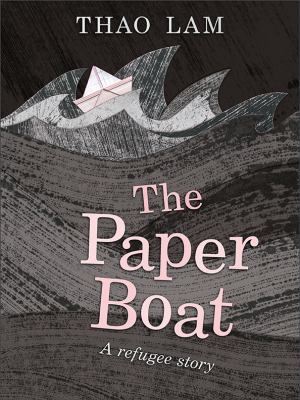
Honaker and Miller propose that wordless picture books are not just beneficial for young children, but can increase literacy, vocabulary, and speaking even for adult MLs. They offer the rationale and methodology for using this resource.

They describe WPB as “visual story telling” which can serve as “sources of information” which can enhance communication.

The authors address the following:

COMMON MISCONCEPTIONS ABOUT WPBS

  • They are completely wordless – There may be occasional labels or signs in the images which make those words relevant.
  • They are substandard to picture books with words – Some have won literary awards.
  • They are not useful once a student can read. – They can be used for discussion and writing about social problems or learning about alternate perspectives.
  • They are easy to read. – Interpreting the images requires more contemplation since the information is not given in text form.
  • They can be quickly “read” or narrated. – Full comprehension and the details of the narrative may require more time than a text-based story.


UNIQUE ADVANTAGES OF WPBS

  • A form of alternative assessment – Students can use various means to demonstrate their understanding of the story and their ability to make inferences.
  • Equitable literacy access – WPBs can break down language barriers and by allowing for multiple responses, change the expectation that there is only one right answer.
  • Multicultural themes and perspectives – Students can learn about and appreciate other cultures.
  • Development of visual literacy – Students are exposed to more visual imagery now than in the past, and these books can enhance their analytical ability.
  • Pictures narrate the story – MLs who are beginning to learn the language can comprehend the narrative because the images are the essence of the story and not superfluous visuals.
  • Opportunities to connect to home literacies – When taken home, WPBs can allow for parents to use their own language to discuss the stories.


IMPLEMENTATION CONSIDERATIONS

  • The role of the teacher – Background information may be necessary as well as the use of open-ended questions.
  • Develop opportunities to learn oral literacy skills – Group discussions can encourage participation and build language skills.
  • Content integration – Specific books align with standards for language arts, social studies, and science.
  • Tools for differentiation – With multiple viewings, tasks can be assigned for different levels of MLs.
  • Challenges of implementation – Availability of texts, getting readers to take the time to analyze images, and students’ abilities are problems that must be resolved to use WPBs.


EXAMPLES OF IMPLEMENTATION WITH ENGLISH LEARNERS IN MULTIPLE CONTEXTS

  • The authors offer seven examples of how to use these books.


FINAL THOUGHTS

While more research is needed to substantiate the findings here, Honaker and Miller quote one of their sources, “’wordless picture books may be the best platform for introducing many narrative conventions, reading processes, and visual strategies to readers of all ages.’ Hopefully, in time, more teachers can adopt this perspective.”
Here are the lessons, examples, and resources.

Announcements

Morris/Sussex Counties Virtual Chapter Meeting, Thursday, Apr 16 from 5:30 pm to 6:30 pm. Title: Breaking Language Barriers: How Assistive Technology Empowers Bilingual Learners Presenter: Cecilia Esteves, Register on Eventbrite

Join us for the Virtual SIG Meet & Greet hosted by NJTESOL/NJBE on April 17th at 6:30! This will be a great opportunity to meet the elected leaders representing your professional interests and learn how to get more involved in the organization!
At this event, you’ll meet the Special Interest Group (SIG) Representatives who serve on the Executive Board and advocate for educators and Multilingual Learners across different contexts.
Bonus: Stay afterward for the Monthly Executive Board Meeting at 7:00 PM to see how NJTESOL/NJBE leadership collaborates, advocates, and plans for upcoming events!
Register for both on Eventbrite

The Passaic County Chapter cordially invites you to their April PD session with author Andrea Bitner. Wednesday April 22, 2026, 6:30-7:30pm. via Zoom

  • Andrea Bitner is an English Language Learner (ELL) educator, author, and speaker. Now in her 26th year in public education, she has taught K–12 multilingual learners from around the world, empowering them to thrive through language and connection.
  • Her new book, When Niagara Falls, released October 2025, is a powerful memoir about a student named Niagara who learns to trust and heal through the connection with a dedicated teacher who sees beyond her protective walls.
    Register via Eventbrite. PD certificate provided.


Join NJTESOL/NJBE virtually for our final PLC meeting of the school year on April 23rd at 5:00 pm. Verbal Reasoning and Literacy Knowledge Strands of Language Comprehension is presented by Maria Halkias, Assistant Professor at Stockton University, and Christiana Dalton, ESL Teacher. We are pleased to continue NJTESOL/NJBE’s overview of the Science of Reading/Structured Literacy. Register on Eventbrite

Register for the 2026 Spring Conference
Theme – Unlock Your Potential: BE Multilingual – Celebrating 50 Years of NJBE
You can attend in person at the Hyatt Regency Hotel, May 19, 20, & 21 (Tuesday, Wednesday & Thursday) OR view the Virtual Library Conference: May 27 through August 20 Regular registration is open through April 24, 2026 or until capacity is reached.
See more information here.

Virtual art meets language learning:
A tech-enhanced ESL experience

By Nesreen El-Baz, ESL Educator

“Using virtual art with ELLs transforms language learning into a rich, human experience, using self-expression and global awareness to enhance vocabulary, grammar, and fluency”

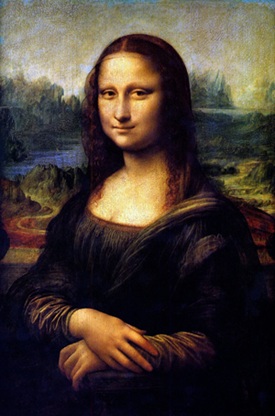
In this article, El-Baz provides a standards aligned lesson plan for using virtual museum art pieces as a language learning tool. Students can learn vocabulary, analyze symbols, and discover history. They can tell stories that connect to their own experiences, and in the process, enhance critical thinking and empathy for other cultures. Creating a dialog for a work of art develops higher-order skills of “describing, analyzing, and presenting–while gaining insight into diverse cultures.”

The article contains links to five student-created videos, each about a selected painting.

The author concludes that “Bringing virtual art into the ESL classroom transforms language learning into a rich, human experience. It fosters self-expression, cultural appreciation, and global awareness while enhancing vocabulary, grammar, and fluency.”

You can watch the students’ videos here.

Vista Higher Learning ad

2025 Spring Conference Platinum Sponsor

April 7, 2026

10 Activities to Improve Your English Vocabulary
and
Uncovering Language Learning Strategies for University Students in STEM

Articles

Instruction as Advocacy– Amber Ingram

Building a Professional Learning Network (PLN) on Social Media: What Worked for Me!– Cecilia Vila Chave

Meet the 2026 Spring Conference Invited Speakers

10 Activities to Improve Your English Vocabulary -Emile Dodds
and
Uncovering Language Learning Strategies for University Students in STEM -Tokyo University of Science

Wordless but not silent: Unlocking the power of wordless picture books -Jennifer D. Honaker, Ryan T. Miller
and
Virtual art meets language learning: A tech-enhanced ESL experience
-Nesreen El-Baz, ESL Educator

The Courage to Learn -Douglas Fisher, Nancy Frey, and James Marshall
and
When Have You Ever Failed at Something? What Happened as a Result? -Katherine Schulten

Adapting Gradual Release of Responsibility for English Language Learners -Tan Huynh and Beth Skelton
and
Using PBL to Support Young English Learners -Cecilia Cabrera Martirena

Language of Identity, Language of Access -Michelle Benegas and Natalia Benjamin
and
Classroom Activities for Building Critical Multilingual Awareness -Naashia Mohamed

Using a True Crime Book as a Bridge Towards L2 Literacy -Elizabeth Farro

Cultivating Team Dynamics that Strengthen ML Instruction -Corinne Galasso

Message from the President
and
Message from the Vice President

All Learners are Language Learners: Planting the Seed of Language Development in ALL Spaces -Cecilia Vila Chave

ESL Summit at Bergen Community College -Leah Carmona

Contact Us

Send an e-mail to: webmaster@njtesol-njbe.org

Send Message

Home
About Us
Executive Board Nominations
Spring Conference
Other Conferences
Seal of Biliteracy
Advocacy
Chapter News
Membership Application
Discussion List Information
Awards & Scholarships
Scholarship Donation
Helpful Links
Online Teaching Resources
Voices Newsletter
Executive Board
Privacy Policy
NJTESOL-NJBE By-Laws Approved 2-7-2020
Contact Us

For Your Information

Transitional Changes to State Assessments and Graduation Requirements

Position Statement on Language Rights

Testimony to NJDOE about changes to the Bilingual Code

Position Statement on Protecting the Rights of English Language Learners

NJDOE PARCC Testing Accommodations for English Learners

Resource: FABRIC – A Learning Paradigm for ELLs

Important Dates

Spring Conference 2026

May 19, 20, & 21, 2026
(Tuesday, Wednesday, & Thursday)